
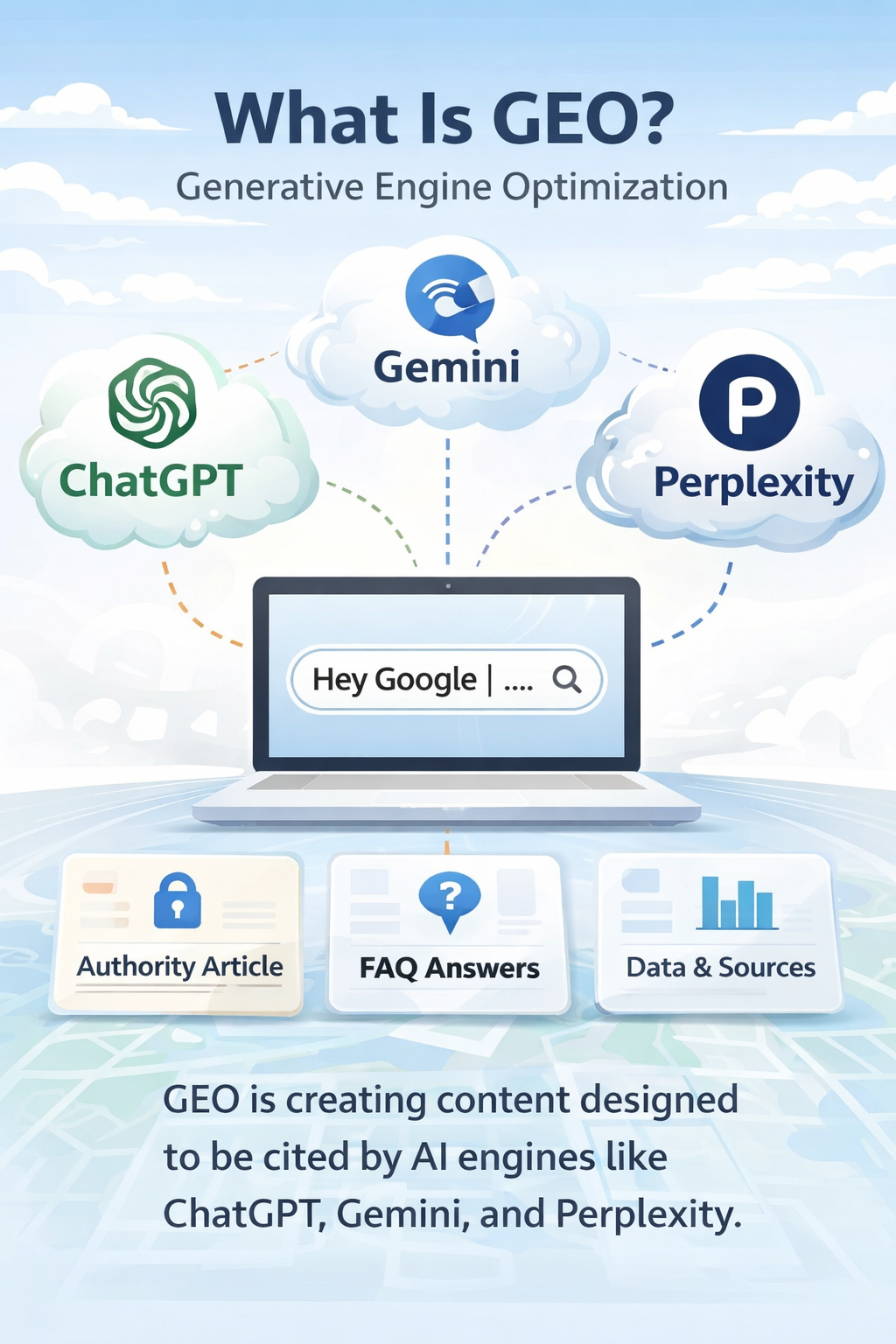
Generative Engine Optimization (GEO) is a digital content strategy focused on making information easy for AI systems to understand, verify, and cite when generating answers.
Unlike traditional search engine optimization (SEO), which focuses on ranking webpages in search results, GEO focuses on ensuring that AI systems reference your content as a trusted source when generating responses.
AI systems used by platforms such as OpenAI, Google, and Anthropic increasingly generate direct answers instead of presenting lists of links. GEO helps ensure your content is included in those answers.
How Generative Engine Optimization Works
Modern AI search systems typically operate using a process called retrieval-augmented generation (RAG).
In this process:
User question
↓
AI retrieves relevant documents
↓
AI evaluates reliability and relevance
↓
AI generates a synthesized answer
↓
Sources may be cited
GEO improves the likelihood that your content will be selected during the retrieval phase.
GEO vs Traditional SEO
| SEO | GEO |
|---|---|
| Focuses on ranking links | Focuses on being cited in AI answers |
| Optimizes for keywords | Optimizes for entities and concepts |
| Backlinks influence rankings | Clarity and authority influence citations |
| User clicks determine success | AI retrieval determines success |
Both strategies can work together, but GEO addresses the growing number of searches that end in AI-generated answers rather than link clicks.
Key Components of Generative Engine Optimization
1. Clear Entity Definitions
AI systems understand content best when it clearly defines concepts.
Example:
Generative Engine Optimization is the practice of structuring digital content so large language models can retrieve and reference it when generating answers.
This helps AI models connect the concept to related entities such as:
- large language models
- AI search engines
- conversational interfaces
2. Structured Explanations
AI retrieval systems prefer pages with clear structure.
Typical GEO page structure:
Definition
How it works
Key strategies
Examples
Frequently asked questions
Sources
This mirrors the way AI systems construct answers.
3. Topical Authority
AI engines often favor sources that demonstrate depth within a subject area.
For example, a website that publishes multiple articles about:
- AI search
- knowledge retrieval
- content architecture
is more likely to be considered a trusted source than a site with a single GEO article.
4. Verifiable Information
AI systems prefer content that references reliable sources, including:
- research publications
- technical documentation
- government reports
- academic institutions
This increases confidence in the retrieved information.
5. Conversational Question Coverage
Because users ask AI systems natural questions, GEO content should include common queries.
Example questions:
- What is Generative Engine Optimization?
- How is GEO different from SEO?
- How do AI search engines find information?
- Why is GEO becoming important for digital marketing?
Why GEO Is Becoming Important
AI-driven search systems are increasingly replacing traditional link-based results with direct answers.
This shift is visible in systems developed by companies such as:
- Google with AI Overviews
- OpenAI through ChatGPT browsing features
- Perplexity AI through citation-based AI search
As a result, content visibility increasingly depends on whether an AI system chooses to reference your information.
Example of GEO in Action
If someone asks an AI system:
“Why do cracks appear above doors?”
A GEO-optimized page would include:
- a clear definition of the issue
- structural explanation
- causes and examples
- references to building science
This structure makes it easier for the AI to retrieve and summarize the explanation.
Frequently Asked Questions
Is GEO replacing SEO?
No. SEO still drives traffic through traditional search results. GEO complements SEO by improving visibility in AI-generated answers.
What type of content works best for GEO?
Educational and explanatory content tends to perform best because it provides structured information that AI systems can easily summarize.
Do AI systems rank websites?
Most AI systems do not rank websites in the traditional sense. Instead, they retrieve relevant documents and synthesize answers.
Summary
Generative Engine Optimization is the practice of structuring content so AI systems can easily:
- understand the topic
- verify the information
- retrieve the page
- reference it when generating answers
As AI-driven search becomes more common, GEO will likely become an increasingly important complement to traditional SEO strategies.