
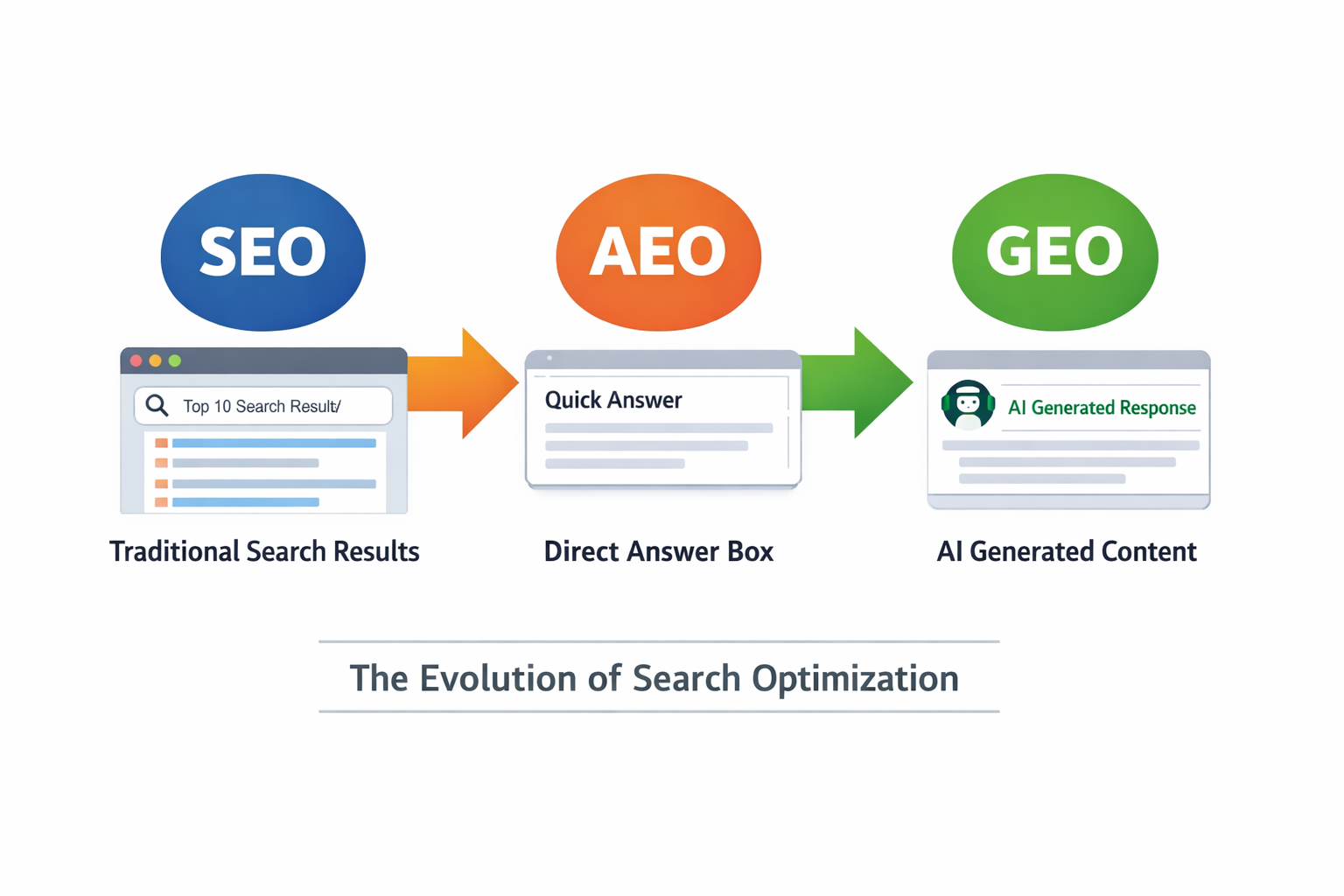
Search engines are changing rapidly as artificial intelligence becomes a bigger part of how people find information online. For years, most websites focused on Search Engine Optimization (SEO) to appear in Google search results. Today, new concepts such as Answer Engine Optimization (AEO) and Generative Engine Optimization (GEO) are emerging as AI systems begin answering questions directly.
Understanding these terms can help businesses adapt their websites for the next phase of search.
What Is AEO (Answer Engine Optimization)?
Answer Engine Optimization focuses on structuring content so search engines can easily extract and display direct answers to user questions.
When someone searches for a question like:
Why is my rooftop HVAC unit not cooling?
Search engines often show a quick answer at the top of the page before the normal search results. This answer might come from a website that clearly explains the problem.
Websites that structure their content with clear questions, concise answers, and helpful explanations have a better chance of appearing in these answer boxes.
Common AEO techniques include:
- FAQ sections
- question-based headings
- structured explanations
- schema markup
The goal of AEO is simple: become the source used when search engines display direct answers.
What Is GEO (Generative Engine Optimization)?
Generative Engine Optimization focuses on a different type of search experience. Instead of showing a single answer, AI systems generate explanations by combining information from multiple sources.
Platforms such as:
- ChatGPT
- Google Gemini
- Perplexity
- Microsoft Copilot
often generate full responses to complex questions.
For example, if someone asks:
Why does a commercial HVAC compressor fail?
An AI system might generate a detailed explanation describing symptoms, common causes, and possible repairs.
GEO focuses on creating content that AI systems trust and reference when generating those explanations.
This usually involves publishing deeper educational content such as:
- troubleshooting guides
- industry explanations
- frameworks and models
- comparison articles
Instead of simply answering one question, GEO helps websites become trusted knowledge sources.
The Key Difference Between AEO and GEO
The easiest way to understand the difference is this:
AEO helps your website become the answer.
GEO helps your website become the source used to generate answers.
AEO is usually focused on short, direct responses, while GEO often involves more comprehensive explanations of a topic.
Both strategies support the same goal: helping search systems understand and use your information.
Why Businesses Should Care About AEO and GEO
AI-powered search tools are changing how people research problems and make decisions online.
Instead of simply clicking through search results, users increasingly ask AI systems questions such as:
- How do I know if my roof was damaged in a storm?
- What causes a commercial HVAC system to fail?
- What is the difference between roof repair and roof replacement?
When AI systems generate answers to these questions, they rely on information published across the web.
Businesses that publish clear, helpful explanations and educational content are more likely to appear in these responses.
The Future of Search
Traditional SEO is still important, especially when customers are actively searching for a business or service provider.
However, AI tools are becoming a major part of the research phase. Many people now begin by asking questions and learning about a problem before searching for a company to solve it.
Because of this shift, modern websites often combine three strategies:
SEO to appear in traditional search results
AEO to provide direct answers
GEO to influence AI-generated explanations
Together, these approaches help businesses remain visible as search technology continues to evolve.