
Most homeowners don’t immediately search for a roofing contractor after storm damage. They first try to understand their insurance coverage, the claim process, and what steps they should take. Roofing companies that provide clear guidance during this research stage often become the trusted contractor homeowners call when repairs begin.
Understanding the Hurricane Insurance Research Stage
After a hurricane passes, homeowners usually move through a predictable information cycle.
They begin asking questions such as:
• Does my insurance cover roof damage?
• Should I call insurance or a roofer first?
• What photos do I need for a claim?
• How long does a roof insurance claim take?
During this stage, homeowners are not yet choosing a contractor. Instead, they are looking for guidance and reassurance.
Roofing companies that create helpful content answering these questions position themselves as the trusted authority before the repair decision is made.
This is one of the most effective ways to generate leads from search engines and AI assistants.
The Insurance Research Opportunity for Roofers
Most roofing SEO strategies focus only on searches like:
roofers near me
roof replacement Tampa
roof repair company
But by the time homeowners search those terms, they are often comparing multiple contractors.
The bigger opportunity exists earlier in the process with searches such as:
roof insurance claim hurricane
should I call insurance or roofer first
roof damage insurance process
how to document roof damage for insurance
If a roofing company appears during this stage, they can become the trusted advisor before competitors even enter the conversation.
The Four Key Content Assets Roofers Should Create
To capture homeowners during the insurance research stage, roofing companies should build four foundational pieces of content.
1. Hurricane Roof Insurance Coverage Guide
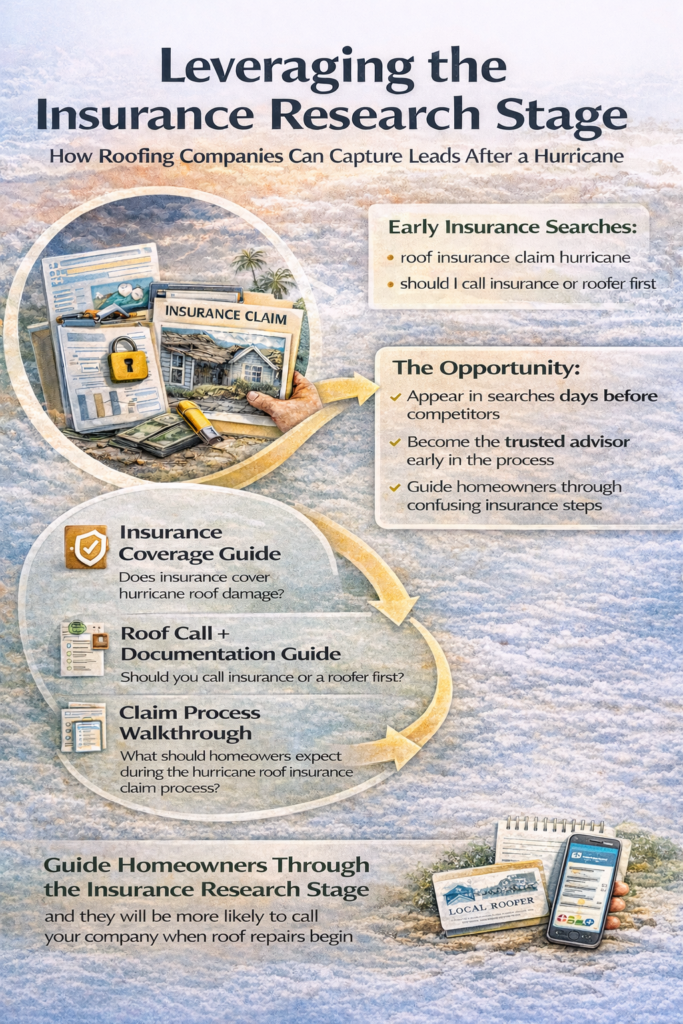
1. Hurricane Roof Insurance Coverage Guide
Example article title:
Does Homeowners Insurance Cover Hurricane Roof Damage in Florida?
This article should explain:
• wind damage vs hurricane damage
• hurricane deductibles
• common coverage limitations
• what types of roof damage are usually covered
This type of content helps homeowners understand whether filing a claim is appropriate.
2. First Steps After Roof Damage
Example article title:
Should You Call Insurance or a Roofer First After Hurricane Roof Damage?
This article should explain:
• how to assess damage safely
• when to contact insurance
• when to call a roofer for inspection
• what information insurance companies require
This question appears frequently in AI search results, making it excellent AEO content.
3. Roof Damage Documentation Guide
Example article title:
How to Document Hurricane Roof Damage for an Insurance Claim
Content should include:
• what photos to take
• which areas of the roof to document
• how to record interior water damage
• why early documentation matters
Pair this with a Hurricane Damage Photo Library showing common damage types such as:
• missing shingles
• flashing damage
• tree impact
• roof leaks
This visual content greatly improves engagement and search visibility.
4. Step-by-Step Insurance Claim Process
Example article title:
The Hurricane Roof Insurance Claim Process Explained
Break the process into clear steps:
- Identify storm damage
- Document the damage
- Contact insurance provider
- Schedule adjuster inspection
- Obtain contractor estimate
- Claim approval and repair scheduling
This guide helps homeowners understand what to expect and reduces anxiety about filing a claim.
Why This Strategy Works for AEO (Answer Engine Optimization)
AI search systems prioritize content that clearly answers procedural questions.
Insurance-related searches often involve:
• step-by-step explanations
• definitions of coverage terms
• practical homeowner guidance
By creating structured articles around these topics, roofing companies increase their chances of appearing in AI-generated answers and voice search results.
When homeowners ask questions like:
“Does insurance cover roof damage after a hurricane?”
AI systems often reference pages that provide clear, structured explanations of the claim process.
Turning Insurance Research Into Roofing Leads
The goal of insurance research content is not just traffic. It is trust building.
When homeowners receive clear guidance during a stressful situation, they are more likely to contact the company that helped them understand the process.
Effective pages should include:
• inspection request forms
• emergency contact numbers
• roof damage inspection offers
• downloadable documentation checklists
These elements allow roofing companies to capture leads while still presenting the page as helpful educational content.
The Long-Term Advantage
Storm chaser contractors typically focus on:
• aggressive advertising
• door-to-door sales
• short-term visibility
Local roofing companies that invest in educational content and search visibility before storms occur often dominate the research stage when homeowners begin looking for answers.
By appearing early in the homeowner research process, these companies establish credibility long before competitors enter the search results.